


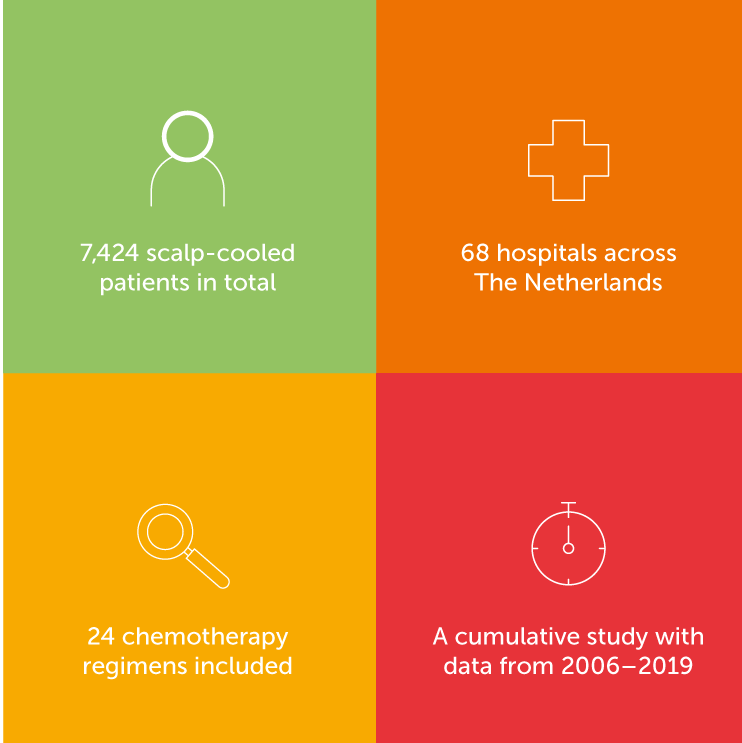
The Scalp Cooling Registry, the largest real-world, multicentre study of scalp cooling efficacy, continues to provide critical insights into mitigating chemotherapy-induced alopecia (CIA). This cumulative study, spanning 13 years and involving 7,424 patients across 68 hospitals in the Netherlands, is the most comprehensive source of data on scalp cooling available to date. The study's third paper, published in The Oncologist in June 2024, builds on previous publications from 2012 and 2019, solidifying its role as a key resource in understanding the factors that influence successful scalp cooling.
Read more about the Scalp Cooling Dutch Registry

“This is the first time that the patient experience of scalp cooling has been documented on this scale and advocates the importance of the patient perspective for chemotherapy-induced side effect management.” - Toni Brook, co-author and Postgraduate Research Scientists at The University of Huddersfield.
The Scalp Cooling Registry gathered data from patients who underwent scalp cooling across 24 different chemotherapy regimens. The authors of the study also analysed various potential determinants, such as chemotherapy type and dosage, patient demographics, hair characteristics, and scalp cooling protocols, to better understand what influences scalp cooling outcomes. The latest cohort (2013-2019) included additional variables such as anthropometric characteristics and lifestyle tendencies, offering a more comprehensive view of the potential factors.

“Sharing data enhances both patient outcomes and the overall quality of care. By collaborating, you can gather sufficient data more rapidly, allowing for reliable conclusions about effectiveness and the identification of best practices” – Corina Van den Hurk, PhD, co-author and Senior Researcher at the Catharina Hospital, Eindhoven.
The Registry used two evaluation criteria to measure scalp cooling efficacy. Primarily, it was measured using patient-reported preferences to wear a head covering (a wig or scarf) during their last reported scalp cooling session. A head covering is commonly used as the most important outcome measure of efficacy because it represents perceived satisfaction with scalp cooling.
Additionally, the World Health Organisation (WHO) alopecia scores were used to gauge the extent of hair retention. The WHO score ranges from 0 -3 (0: none, 1: minimal, 2: severe and 3: total alopecia)
The analysis of the registry data confirmed that chemotherapy regimen and dosage remain the only consistently identifiable determinants of scalp cooling efficacy at present. Amongst a range of interesting data, the study revealed the following key findings:


Interestingly, the study found that other factors such as patient age, gender, smoking and drinking habits, or previous hair treatments did not significantly influence the success of scalp cooling. This finding underscores the complexity of scalp cooling and suggests that there are still unknown factors that may affect outcomes.
The updated findings have important implications for clinical practice, affirming that scalp cooling is effective for the majority of patients, with no immediate need for changes in current practices. Notably, the study highlights the gender equality in scalp cooling efficacy, demonstrating that both male and female patients benefit equally. As a result, it is recommended that scalp cooling should be routinely offered to male patients as well.
The type of chemotherapy regimen remains the most critical determinant of scalp cooling success, with patients receiving taxanes seeing the best outcomes. However, the study also emphasises the need for further research into the unknown determinants that lead to varying outcomes among patients on the same chemotherapy regimen. Despite these uncertainties, the study encourages patients to continue scalp cooling, even if initial results are not satisfactory, particularly during anthracycline (AC) treatment.
The study also suggests that over time, increased knowledge and better application of scalp cooling protocols have led to better outcomes. This emphasises that accurate deployment of the elements of the treatment such as cap fit and pre- and post-infusion cooling times are even more important in ensuring the best outcomes possible.
While clinical data can be difficult for patients to interpret, the Dutch Registry can be a useful tool to manage expectations when considering scalp cooling.
Together with the patient education materials provided by Paxman, the data can ensure patients are educated about what scalp cooling entails, which will more likely lead to better cap fits and protocols and therefore efficacy and continuation of treatment.
It is important to note that scalp cooling success, however, is subjective. Whilst more than 50% hair retention could objectively be seen as a success, not everyone considers 50% hair loss or more a failure, particularly if the right expectations are set.
Paxman has noticed a shift in attitudes toward scalp cooling, with larger number of patients over recent years showing an awareness of the benefits of scalp cooling beyond retention. Some even state that retention is a bonus, and their primary goal is to preserve the follicles for regrowth and avoid persistent chemotherapy-induced alopecia.
This same data also acts as the basis for Paxman’s Scalp Cooling Outcomes Calculator. An online tool, which allows both clinicians and patients to enter details of the chemotherapy regimen and dosage (if known) and find out the estimated chances of retaining half of their hair. This estimate is based on the 7,424 people studied in the 3 cohorts of the Dutch Registry and helps patients set realistic expectations for their treatment. Use the outcomes calculator here
The publication of the updated Dutch Scalp Cooling Registry paper in June 2024 marks a significant milestone in the ongoing effort to improve scalp cooling efficacy. By providing robust, real-world data, this registry continues to enhance our understanding of how best to mitigate chemotherapy-induced alopecia, ultimately benefiting both clinicians and patients.

“The publication of the Registry data represents a milestone in clinical scalp cooling research. By analysing the findings from such a large patient cohort, the great statistical power of the study provides the strongest ever evidence for the efficacy of scalp cooling in protecting cancer patients from chemotherapy-induced hair loss”. - Nik Georgopoulos, PhD, BSc, FHEA, co-author and associate professor at Sheffield Hallam University.
For more information and resources on the Dutch Registry, including an abstract and full paper download, visit scalpcoolingstudies.com/scalpcoolingregistry


