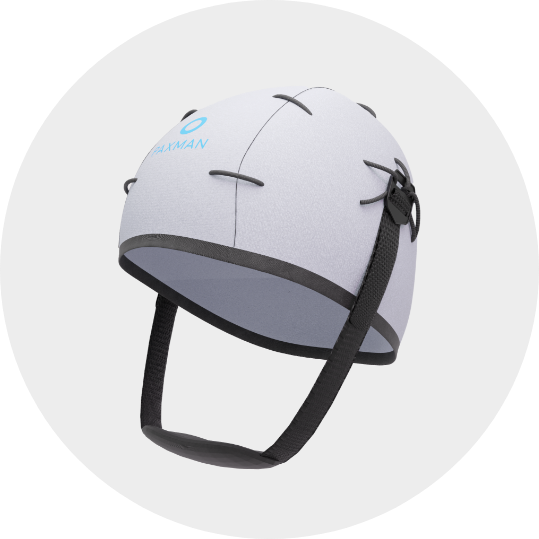
The Paxman Scalp Cooling System

The Paxman Scalp Cooling System provides the leading scalp-cooling technology for preventing chemotherapy-induced alopecia

The Paxman Scalp Cooling System (PSCS)

Globally, 6.4 million patients will lose their hair every year as a result of chemotherapy.¹ ² It is predicted that by 2040, that figure will be over 9.7 million people.³

Loss of hair can be traumatic, debilitating, and can have an understandably profound effect on a patient’s identity, privacy and confidence, making strategies for managing this side-effect crucial.

Scalp cooling can help
reduce chemotherapy-induced alopecia.

Scalp cooling has long been the only scientifically validated method of reducing chemotherapy hair loss and promoting quicker hair regrowth post treatment. The Paxman Scalp Cooling System revolutionises the way this is managed around the world, and its innovative features can improve the experience for everyone involved, from patients to clinicians.

Based on the largest real-world study to date of 7,424 patients, patients have, on average, a 53% chance of retaining half of their hair or more. Additionally in this study, 56% of all patients studied did not require a head covering.⁴
The Scalp Cooling Registry

Features

The Paxman Scalp Cooling System consists of a cold cap, which comes in two sections - an inner cap and an outer cover – worn by the patient and is attached to a mobile, compact refrigeration system. It circulates coolant continually between the system and the cap, extracting heat from the patient’s scalp and maintaining it at the optimum temperature for the mechanisms of scalp cooling to take place.
Download the product brochure

The System

Compact. User-friendly. Built for busy oncology clinics.

  • Maintains safe, consistent temperatures, helping to achieve the optimum scalp temperature (18°C–22°C). This enables sufficient cooling at tolerable levels, essential for maximum hair retention and regrowth.
  • Quick and easy to use with an intuitive visual touchscreen interface that guides you through the scalp cooling process. Available in multiple languages.
  • Instant cooling capabilities for immediate use once a patient is connected to the system. *
  • Easy to manoeuvre to a post-infusion cooling area, freeing up space in the infusion room.
  • Mechanical operation and user-friendly cooling timers make administering treatment more manageable, reducing the burden on nursing staff.
  • Also available as a dual system option to maximise and double your patient throughput, treating two patients simultaneously and independently.
  • Quick release plastic couplings ensure convenience, safety, and minimal spillage of coolant.
  • Restroom break timer feature, allowing patients to simply and temporarily disconnect for up to 10 minutes.
  • Quiet operation prevents distraction and disruption, maintaining a calm atmosphere for both patients and nurses
  • Temperature and quality-controlled design to prevent over or undercooling.
  • Visual and audible information signals for restricted or lack of coolant flow.
  • Clean, clutter-free setup thanks to smart coolant line management for maximum comfort and safety.

*After an initial 30-minute refrigeration period at the start of each day

The Coolant

The link between system and cap. The bespoke sub-zero coolant is fundamentally essential for efficacious scalp cooling, supporting the maintenance of a consistent target scalp temperature.

  • Low temperature, non-viscous bespoke coolant with sub-zero operating capability prevents freezing or crystallisation, ensuring a better flow rate compared to other coolants.
  • Ultra-efficient heat transfer properties allow heat extraction from the scalp to be re-cooled via the system, maintaining the target temperature for optimal results.
  • Non-return valves on coolant refills ensure easy and mess-free top ups.
  • Coolant level sensors and minimal system downtime – frequent use of the system reduces evaporation of the coolant, resulting in fewer top ups.
  • Continuous coolant flow eliminates the need for frequent cap changes experienced with manual caps, reducing clinical intervention time.
  • Temperature is continuously monitored by the system, freeing up valuable nursing time.

The Cap and Cover

Medical grade engineering meets human-centred design.

  • Patented W-shaped channels of the cap ensure maximum surface contact for the most efficient coolant distribution across the scalp, supported by years of cranial data studies.
  • Made from medical-grade silicone using 3D-modelling technology, which adapts to global head shape variances for the optimal close-fitting surface contact – crucial to maximising potential hair retention, regrowth, and achieving the best possible outcomes.
  • Lightweight and flexible for a comfortable fit.
  • Insulating neoprene cap cover prevents heat absorption from ambient temperatures, keeping the cap and scalp cool.
  • No drips - the cover’s absorbent lining additionally minimises condensation from the cap before it reaches the patient’s neck.
  • Adjustable bungee cords and toggle on the cap cover ensure maximum scalp contact with the cap.
  • The bungee cord mechanism has been designed for ease of use, preventing loose cap fitting and air pockets without overtightening.
  • A chin strap ensures even compressions around the head.
  • Cap and covers are supported by simple guidance from Paxman for the best fit.
  • Available in a range of sizes to suit varying head sizes, colour-coded for quick and easy identification

A degree of control

For people receiving chemotherapy, scalp cooling can mean: 

  • Regaining some control when so much is out of their hands
  • Keeping their diagnosis private
  • Shielding their family and friends
  • Retaining their identity, confidence and normality
  • Preventing stress and depression
  • Positive attitudes to treatment (i.e. not rejecting chemotherapy for fear of hair loss)
  • Quicker hair regrowth and prevention of persistent chemotherapy-induced alopecia (PCIA)
  • Facilitating a quicker return to work

References

¹ Wilson, B. E., Jacob, S., Yap, M. L., Ferlay, J., Bray, F., & Barton, M. B. (2019). Estimates of global chemotherapy demands and corresponding physician workforce requirements for 2018 and 2040: a population-based study. The Lancet. Oncology, 20(6), 769–780. https://doi.org/10.1016/S1470-2045(19)30163-9

² Santos, T. S., Hernandéz Galvis, K., Vañó Galván, S., & Saceda-Corralo, D. (2021). Post-chemotherapy alopecia: what the dermatologist needs to know. International journal of dermatology, 60(11), 1313–1317. https://doi.org/10.1111/ijd.15812

³Sullivan, Richard, et al. “More Than 50% Rise in Chemotherapy Demand by 2040.” Cancer World, May 2019. https://archive.cancerworld.net/news/more-than50-percent-rise-in-chemotherapy-demand-by-2040/

⁴Toni S Brook, Tanja Seetsen, Marcus W Dercksen, Annemarie van Riel, Veerle A Derleyn, Johan van den Bosch, Johannes W R Nortier, Andrew Collett, Nikolas T Georgopoulos, Jarek Bryk, Wim P M Breed, Corina J G Van Den Hurk. Results of the Dutch scalp cooling registry in 7424 patients: analysis of determinants for scalp cooling efficacy. The Oncologist. 2024;, oyae116, https://doi.org/10.1093/oncolo/oyae116
MiB_Logo_Vertical_Colour
© Paxman Coolers 2022