


The Paxman Scalp Cooling team was proud to join the global supportive care community in Seattle for the Multinational Association of Supportive Care in Cancer (MASCC) / International Society of Oral Oncology (ISOO) Annual Meeting 2025. It was a truly inspiring conference of knowledge-sharing, collaboration, and celebration of innovation.

Talking about the event, CEO Richard Paxman OBE said:
“A fantastic few days in Seattle at my favourite conference of the year, The Multinational Association of Supportive Care in Cancer (MASCC) 2025! Such an impressive and collaborative group of people, there is no other meeting like it.”

From the very start, our team hit the ground running – literally! Taking part in the first-ever MASCC/ISOO Fundraiser Run, the team contributed to supporting the MASCC Emerging Leaders Scholarship which empowers early-career researchers shaping the future of supportive care in cancer.
Day one of the conference set the tone for valuable conversations around chemotherapy side effect management at Booth 9. We were grateful to make connections with oncologists, nurses, researchers and countless passionate advocates, with exciting discussions around scalp cooling access and the latest information on our device to prevent CIPN coming next year. These discussions reminded us how far we’ve come and just how much more we can do together to improve patients’ quality of life.
(E)PROM Evaluation of Patient Satisfaction with Scalp Cooling Derived from The Dutch Scalp Cooling Registry (DSCR).
We were honoured to have Toni Brook, Post-Doctoral Research Associate at Sheffield Hallam University, present key findings from the Scalp Cooling Registry on patient satisfaction, taking a closer look at patient-reported outcomes (ePROMs) to better understand the real-world impact of scalp cooling.
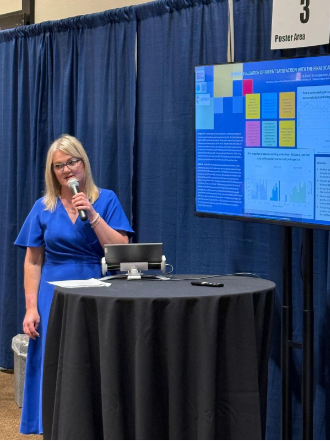
These findings showed that patient satisfaction was linked to their perceived success of scalp cooling (i.e. whether they wore a head covering or not). Head cover usage was not influenced by clinical location. Reasons for stopping scalp cooling were selectively associated with satisfaction with the result.
No other significant differences were found for satisfaction (result, IP, expertise of staff) or ratings (the expertise of staff, experience based on IP), when comparing treatment group, clinical location, age, ethnic hair type, and chemical manipulation to the hair.
Patient scores relating to insecurity with the current result successively decreased throughout the course of treatment.
In the Grand Ballroom III, Joline Lim (Senior Consultant at the Department of Haematology-Oncology, National University Cancer Institute, Singapore) led a valuable interim update on one of the ongoing studies into limb cryocompression.
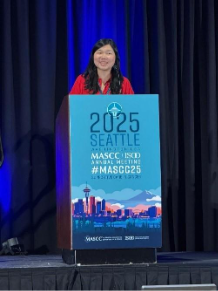
In the presentation, Dr. Lim showed that 76.5% of assessed patients received all planned treatment with cryocompression. It was well tolerated at 11°C, even with concurrent scalp cooling.
Importantly, the incidence of sensory CIPN 12 weeks post-chemotherapy was low: 25% for physician-assessed outcomes and 16.7% for patient-reported outcomes. Only 6% of patients required dose modifications of taxane therapies due to CIPN.
Dr. Lim’s presentation concluded that cryocompression is safe and well-tolerated for patients receiving taxane-based chemotherapy and has shown promising results in preventing CIPN, while allowing for taxane infusion without dosage modification.
Shannon Copeland, Registered Nurse and PhD Researcher from Queen’s University Belfast presented a poster on another Paxman-funded study looking at the experiences, values and priorities of people with breast cancer around hair loss management when undergoing systemic anti-cancer therapy (SACT).

The poster reported that 51.6% of participants within the study answered “Not at all” when asked to rate their level of satisfaction towards the time dedicated to discussing CIA when undergoing SACT treatment.
Participants described difficulties in sourcing clear and concise information around CIA and associated interventions in the absence of guidance from professionals. In addition, patients expressed concerns over cap application and staff attitudes towards scalp cooling, which they perceived to affect their outcomes.
When speaking about the implications for practice, Shannon Copeland expressed the need for increased training (thereby enhancing patient confidence), consistent education and qualitative research exploring patient experiences, professional barriers and facilitators to providing support around chemotherapy-induced alopecia.
Beyond the sessions and presentations, MASCC 2025 was also about strengthening connections. Our team had the pleasure of spending time with brilliant key opinion leaders from around the world who provide outstanding care to their patients every day.
It was also a proud moment to celebrate and congratulate members of our wider Paxman family:
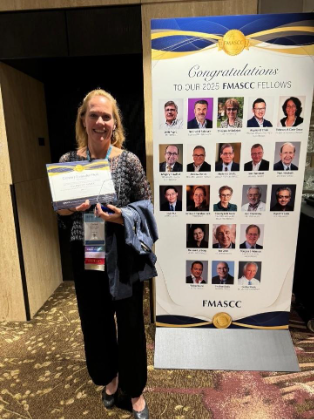
Dr. Corina van den Hurk PhD, FMASCC (Catharina een santeon Ziekenhuis, Eindhoven, NL) was named a MASCC Fellow, recognising her exceptional contributions to supportive care research and multidisciplinary collaboration globally.
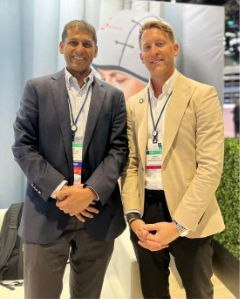
Raghav Sundar MD, PhD, Yale Cancer Center and Smilow Cancer Hospital and Associate Professor at Yale School of Medicine, was awarded this year’s MASCC Innovator Award, an incredible honour that reflects his commitment to driving meaningful change in cancer care.
Both Raghav and Corina have dedicated large portions of their time to working with Paxman to improve the standards of supportive cancer care, particularly in the fields of scalp cooling and the prevention of CIPN. We’re extremely fortunate to work with such incredible individuals and are delighted to see them recognised in this way.
Flying home from MASCC always leaves the team with renewed inspiration and gratitude for those working hard towards accessible, supportive cancer care.
Thank you to everyone who joined our sessions, stopped by our booth, and shared their insights and experiences.
The important discussions and new connections forged here reaffirm our mission: to ensure that anyone facing chemotherapy can access supportive care solutions that help them live better.


