


Two hundred scalp cooling systems are now installed across Brazil, marking a significant development in the country’s capacity to offer supportive care to patients undergoing chemotherapy.
Delivered in partnership with Paxman’s Brazilian distributor, EPTCA, this milestone arrives alongside Paxman installations within 10 public hospitals, forming part of the “Gold Standard” in Brazil’s Unified Health System (SUS). This draws us even closer to our global vision, enabling patients treated entirely within the public sector to access scalp cooling alongside their cancer treatment, regardless of gender, ethnicity and financial situation.

Equity, consistency, simplified access, and high-quality care standards are at the heart of both Paxman and its partner in Brazil.
Scalp cooling is widely used internationally to help reduce chemotherapy‑induced hair loss, which can be a distressing side effect for many patients, as the physical and psychological trauma of losing their hair combines with obvious signs of a cancer diagnosis. Its availability within public healthcare settings remains variable in many countries, making sustained integration into national systems an important step towards more equitable supportive cancer care.

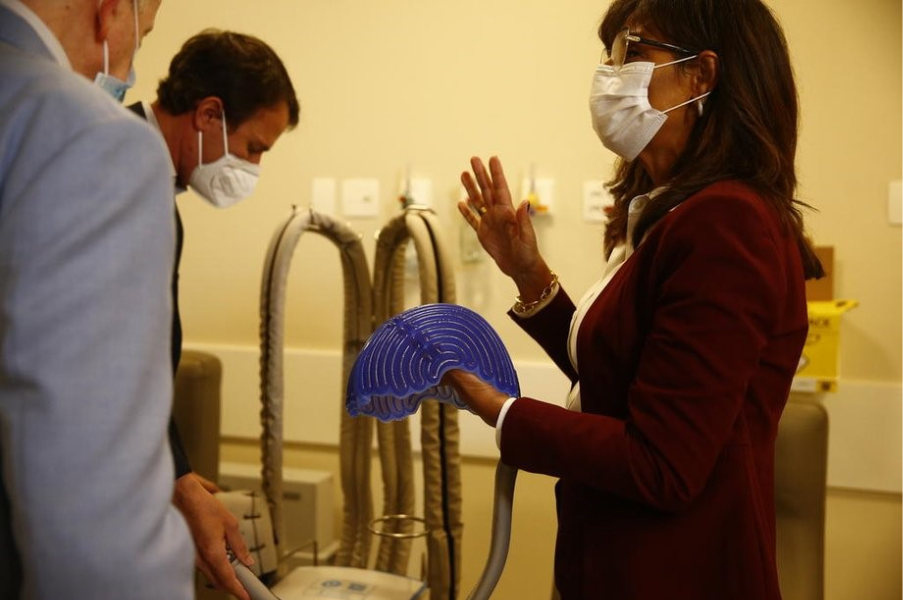
Gustavo Spritzer (pictured centre), CEO of EPTCA and Paxman’s distribution partner in Brazil, commented on the milestone, highlighting the importance of long‑term collaboration with public institutions. He noted that the focus of the programme has been on expanding access responsibly, particularly for patients who rely exclusively on public healthcare services:
“Social responsibility is a fundamental pillar of our strategy in Brazil. Through our commitment to the public healthcare system, including hospitals within the Unified Health System (SUS), we aim to ensure that access to Gold Standard scalp cooling is not limited by socioeconomic factors. Our initiatives are designed to expand access responsibly, working in partnership with public institutions to reach patients who rely exclusively on public care.”
The installations reflect ongoing cooperation between healthcare professionals, hospital administrators and industry partners, with the shared aim of improving quality of life during cancer treatment. While scalp cooling is not suitable for every patient and outcomes can vary, it is recognised as an important supportive option when clinically appropriate.
It goes without saying that without the hard work of our distribution partners, this significant installation milestone would not have been possible. As services continue to expand, maintaining consistent standards of care and ensuring appropriate patient information remain key priorities. Programmes such as this contribute to a broader effort to integrate supportive therapies into routine oncology care, alongside continued evaluation of clinical outcomes and patient experience.


