


The Scalp Cooling Registry, published in 2024, is the largest real-world, multicentre study focused on identifying the determinants of scalp cooling efficacy. Spanning over thirteen years (2006-19), the extensive registry includes scalp cooling data from 7,424 patients and 24 chemotherapy regimens across 68 hospitals in The Netherlands.
It provides valuable insights, supporting the efficacy of scalp cooling worldwide and has allowed us to roughly estimate how much hair a patient can expect to retain depending on chemotherapy regimen. This is based on averages collected from over 7,000 patients.
Paxman, who have consistently supported the Registry’s efforts, has a range of resources available to help healthcare professionals to better understand the data and main takeaways. These resources include a brochure, whitepaper, outcomes calculator and a web page overview to facilitate international discussions around scalp cooling efficacy.
In the UK, where scalp cooling is embedded into oncology care, this data has been welcomed by oncology centres and proven extremely useful.
Supporting the case for scalp cooling
Due to the vast extent of the data available, the value of scalp cooling is becoming more evident to those across the world who engage with it. At conferences such as CoDays in Morocco and the Reunión Multidisciplinar de Innovación en Cáncer in Málaga, our team has seen first-hand how impactful registry data can be. Surprised at the levels of efficacy, it has led to positive discussions with healthcare providers and clinicians about incorporating the Paxman Scalp Cooling System into their oncology workflows and providing higher quality cancer care.
While scalp cooling is embedded into UK oncology workflows and is routinely offered to patients, the data has helped to drive further engagement with oncology and nursing staff. The outcomes within consistently surprise clinicians, particularly for chemotherapy regimens that are historically viewed as challenging for hair retention.
In the Scalp Cooling Registry, patients receiving anthracycline-only regimens had an average success rate of 40%. This means that 40% of patients on these drugs retained at least 50% of their hair. Some clinicians, who may have been hesitant to offer scalp cooling for more challenging regimens - often due to resource constraints or uncertainty about the value for patients - are now more open to doing so after seeing the registry data and making more informed decisions for their patients.
“We have been offering and using Paxman scalp cooling to our patients for many years, and it is certainly becoming increasingly popular with more patients choosing to than declining.”
– Sonia Clark, Clinical Lead at Bath Clinic, UK
In the UK, clinicians have welcomed Paxman’s resources on the registry, with some centres creating display boards to inform oncology staff and patients.
“Our ability to offer written researched based evidence in addition to practical demonstrations only adds more strength and value to patients choosing to scalp cool.
We have observed that having additional research gives patients confidence and additional motivation in their scalp cooling journey and helps them make informed choices.
Having displayed and developed our patient community notice boards which has included scalp cooling, we have received even more positive feedback. Displaying this information has really raised awareness of not just scalp cooling for our patients but also has led to an increase in local staff and visitors’ knowledge and awareness.”
– Sonia Clark
At a hospital in Leeds, a similar display board with Scalp Cooling Registry data has allowed the clinical team to inspire confidence and hope in their patients when faced with the challenge of chemotherapy.
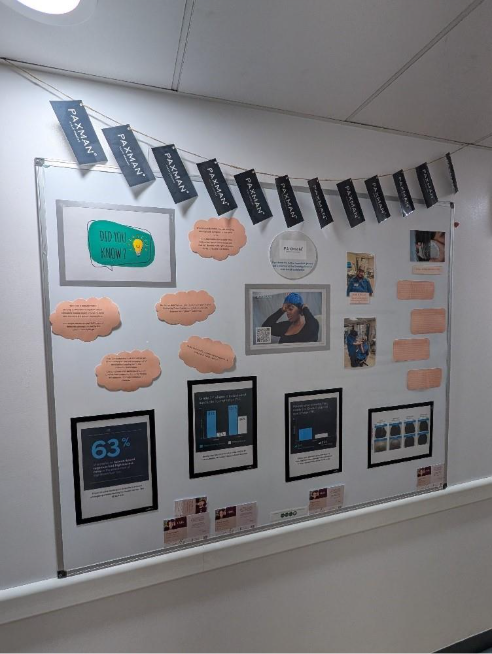
“At Spire Leeds, we believe that being advocates for our patients is crucial, not just as staff but as a community committed to their well-being. Awareness of research like the Scalp Cooling Registry empowers us to provide informed support and guidance, ensuring our patients understand the clinical efficacy of scalp cooling. By displaying this data, we enhance their treatment experience and foster a sense of hope during a challenging time, ultimately contributing to better outcomes and patient satisfaction.”
- Ria Sagar, Head of Cancer Services at Spire Leeds Healthcare
Registry data is also embedded into Paxman’s training materials, providing healthcare professionals with evidence-based resources during system training.
Naturally, there are some reservations from healthcare professionals about the chemotherapy regimens that demonstrate lower hair retention rates. Every patient is different, and there is concern that for more challenging regimens, some patients will not experience the hair retention benefits.
This, however, has presented opportunities for conversations around the regrowth benefits that scalp cooling provides. While patients may lose more hair than hoped in some cases, the treatment has been proven to protect the hair follicles, reducing the delay between hair loss and regrowth in addition to preventing persistent chemotherapy-induced alopecia. This secondary benefit of scalp cooling is not covered within the Scalp Cooling Registry data, but is well documented and researched elsewhere.
Most importantly, the Scalp Cooling Registry helps counteract anecdotal negativity towards the treatment with solid evidence. Clinicians can now reassure patients – and themselves – with real-world data that scalp cooling works. This instils confidence, reduces hesitation, and ultimately drives better patient access.
We’re incredibly proud to see the Scalp Cooling Registry not only reinforcing the proven efficacy of scalp cooling, but also inspiring action in clinical practice.
If you or your cancer centre are interested in supporting an International Scalp Cooling Registry in collaboration with the CHILL group, contributing to increasing the diversity of the cohorts and educating other healthcare providers, you can sign up here.


