


At Paxman, we are witnessing an exciting period of progress for patients undergoing chemotherapy. Following the announcement of the new Category I CPT codes by the American Medical Association, which marks a significant step forward in access to scalp cooling, attention is now turning to state-level legislative efforts that aim to further expand access to this important supportive care option.
In Massachusetts, this momentum is reflected in the introduction of legislation to mandate insurance coverage for scalp cooling, similar to those passed in New York and Louisiana. Senate docket SD 3010, filed by Senator Michael F. Rush in February, was subsequently assigned bill number S.2600 and introduced on June 26th.

The bill clearly defines scalp cooling as devices designed to cool the human scalp to prevent or reduce hair loss during cancer chemotherapy treatment, amending several sections of the General Laws, specifically Chapter 32A, Chapter 175, Chapter 176A, Chapter 176B, Chapter 176G, and Chapter 118E. The definition of a scalp cooling system is inserted into multiple sections, ensuring that these devices are recognized as necessary medical equipment for patients undergoing chemotherapy. The language of the bill provides that scalp cooling system coverage pursuant to this bill shall not exceed $300 per year.
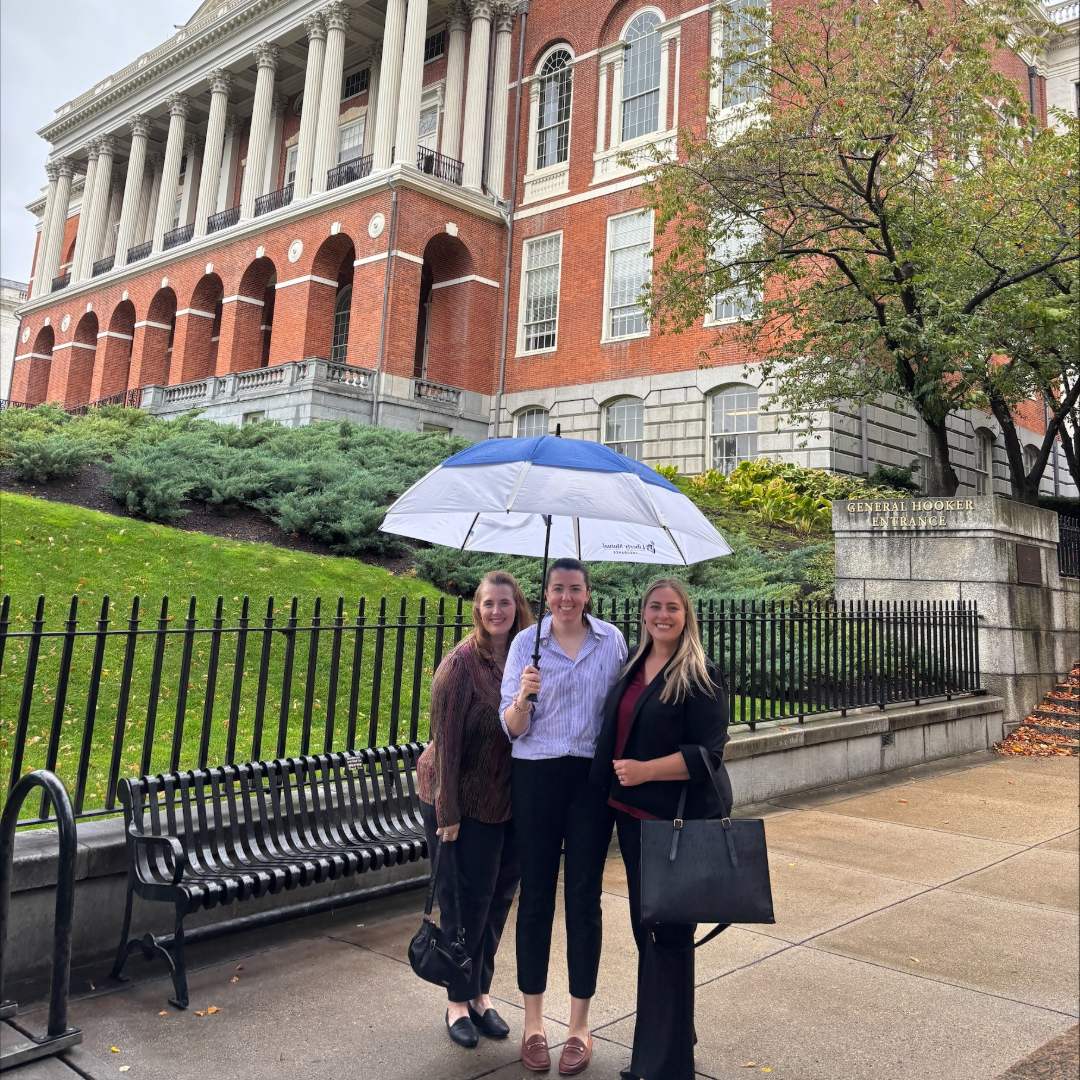
On October 8th, S.2600 advanced to a hearing before the Massachusetts Joint Committee on Financial Services at the Gardner Auditorium.
Paxman was proud to attend the hearing on October 8th, represented by Melissa Bourestom, Market Access and Advocacy and Jacqueline Olsen, BSN, RN, MBA, US Clinical Product Specialist, who gave testimony to support the legislative action.
“I have seen first-hand the heartbreak that comes with hair loss during treatment, for many, it’s not just about losing their hair – it’s about losing privacy, identity and control, at a time when everything already feels so uncertain. I’ve held the hands of patients who said they have dreaded the moment they’d have to tell the world they have cancer. Not through words but through visible loss of hair.” – Jacqueline Olsen, BSN, RN, MBA
Jacqueline supported her testimony at the hearing by referencing a 2021 study, alongside anecdotal physician feedback, which shows that some clinicians may not choose to offer scalp cooling if they are concerned it could create a financial burden for the patient. The perception of this financial burden can result in inequitable access to care, denying some patients the clinically proven benefits of the treatment.

“We know that three out of four patients identify hair loss as the most feared side effect of chemotherapy and as a result about 10% of patients may choose a less effective treatment or even forgo treatment entirely. No one should have to choose between their financial stability, their probability of survival or their emotional wellbeing.”
Melissa Bourestom reaffirmed the importance of scalp cooling within her testimony.
“Scalp cooling has been FDA cleared since 2015… It is recommended by the National Comprehensive Cancer Care Network (NCCN) for breast and gynecologic cancers. In 2022, the American Medical Association issued a resolution supporting universal insurance coverage for this treatment. The American Society of Clinical Oncology endorses it and has updated coding to facilitate access, The American Cancer Society lists it among recommended supportive cancer care options. In short – scalp cooling is a well-established, evidence-based part of comprehensive care.” – Melissa Bourestom
Continuing her testimony, Melissa, on behalf of Paxman and Dignitana, argued that the infrastructure for scalp cooling exists, and that nationally, more than 900 centers provide the treatment.
“What’s needed now is consistent insurance coverage, so that access is based on clinical need, not financial ability.”
Alongside them, Emily Sutliff, a patient advocate, shared her experience with cancer at the hearing, having retained all of her hair through 12 rounds of chemotherapy with the cold cap.
“I am deeply grateful that cold capping helped me retain all my hair through 12 rounds of chemo. Hair loss may seem cosmetic, but its impact is profound. Research shows it’s linked to higher rates of depression, anxiety, and social withdrawal through treatment."


