


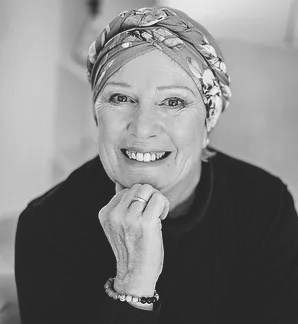
Permanent chemotherapy-induced alopecia (PCIA) is a life-changing, often overlooked side effect of cancer treatment. Shirley Ledlie is a passionate advocate for raising awareness about this condition and has lived with PCIA for over 19 years. Paxman recently spoke with Shirley to learn more about her experience and her efforts to support others who face this lesser-known consequence of chemotherapy.
Shirley's Diagnosis and Hair Loss
Shirley’s journey with PCIA began nearly two decades ago when she was diagnosed with early-stage breast cancer. Following her diagnosis, she underwent surgery, followed by chemotherapy (FEC and docetaxel), and radiotherapy. While the treatment helped to combat the cancer, it left her with a permanent side effect - her hair never grew back.
A few months after chemotherapy, her oncologist raised concerns about the lack of hair regrowth. At this stage, Shirley herself wasn’t too concerned. She thought her regrowth was just a bit slower than everyone else’s. Not long afterwards, Shirley heard the dreaded words from her consultant, “Your hair will never grow back”.
Shirley spoke of her huge disbelief and shock when hearing the news. The next few hours were a blur for her, including a meeting with her consultant about her new PCIA diagnosis.
A Constant Reminder
For Shirley and others with PCIA, the condition is far from cosmetic - it’s a daily reminder of their encounter with cancer.
Every time she looks in the mirror or catches her reflection, the memory of cancer returns. "You always look sick.”
While some suggest wigs or headscarves, Shirley finds them uncomfortable. “At the end of the day, you have to take that off. You go to bed and the last glimpse you’ve had is your cancer diagnosis or your treatment,” she explained.
PCIA also brings practical challenges. In her interview, Shirley highlighted the risk of sunburn on the scalp’s delicate skin and how everyday activities, such as putting the bins out or answering the door, are no longer spontaneous tasks without having to search for a head covering first.
“It never leaves you. You can’t move on”.
Shirley feels that life is no longer a spontaneous one with PCIA.
The Emotional Toll of PCIA
Beyond the physical loss of hair, PCIA also takes an emotional toll on women and men alike. It can lead to feelings of constant self-consciousness, impact mental health, and in some cases, even strain relationships.
“It causes mental anguish, it affects children, it can cause marriage break downs – PCIA doesn’t just go away”.
Shirley stressed the importance of clinicians understanding the significance of hair loss. “It’s never just hair.” she says, pointing out that the global hair care market is worth $90 billion a year.
Raising Awareness and Challenging the Medical Community
Shirley’s personal experience with PCIA inspired her to take action. Recognising that many women might not be fully informed about the risk of permanent hair loss, she co-founded a support group and now runs AHeadOfOurTime.org, a website dedicated to providing information and support for those affected by PCIA.
One of Shirley’s biggest concerns is the lack of information provided to patients. She believes many oncologists are reluctant to warn patients about the risk of PCIA. “Do they not think about life after cancer?” she asked. Shirley told us she believes everyone deserves to be informed about this life-altering side effect, particularly as scalp cooling technology can prevent it.
“In this day in age, there is no need for a woman to lose her hair permanently with the technology and science we have behind scalp cooling.”
PCIA can affect up to 10-30% of patients receiving taxanes, however the true of picture of PCIA is unknown. In our conversation with Shirley, she proposed that oncologists should meet with patients six months after chemotherapy to check if their hair has regrown, especially for those treated with docetaxel. She also advocates for the creation of a database to track cases of PCIA, fearing that many women may be slipping through the cracks if they aren’t aware of the condition or don’t feel comfortable raising concerns.
Building a Global Support Network
Through her website and support group, Shirley has helped to create a global network of individuals who are worried about or affected by PCIA. The group spans the UK, the US, Canada, and beyond, offering a vital space for people to share their experiences, seek advice, and receive support from others who truly understand what they’re going through. For them, it’s an opportunity to talk with people who truly understand how deeply PCIA affects every aspect of life.
This sense of community is essential for many, as Shirley knows firsthand how isolating the experience can be. She is determined to ensure that women are better informed and better supported when it comes to this devastating potential side effect of chemotherapy.
A Call for Change
Shirley’s advocacy work continues to push for change within the medical community. She believes that oncologists have a duty to inform patients about the possibility of PCIA and to offer scalp cooling as an option. Too often, she says, women are either not informed about the risk of permanent hair loss, or they are dismissed when they raise concerns.
On her website, there is a downloadable dossier full of case studies collected over the past decade, which patients can present to their oncologists. However, Shirley notes that many patients feel dismissed when they bring this issue to their doctors. She hopes to change this through continued advocacy, pushing for better awareness, better recording of PCIA cases, and most importantly, better patient care.
Follow Shirley on Instagram.


